General
How The Aligning Health LiveCase Helps Students Master Sustainable Marketing Decisions
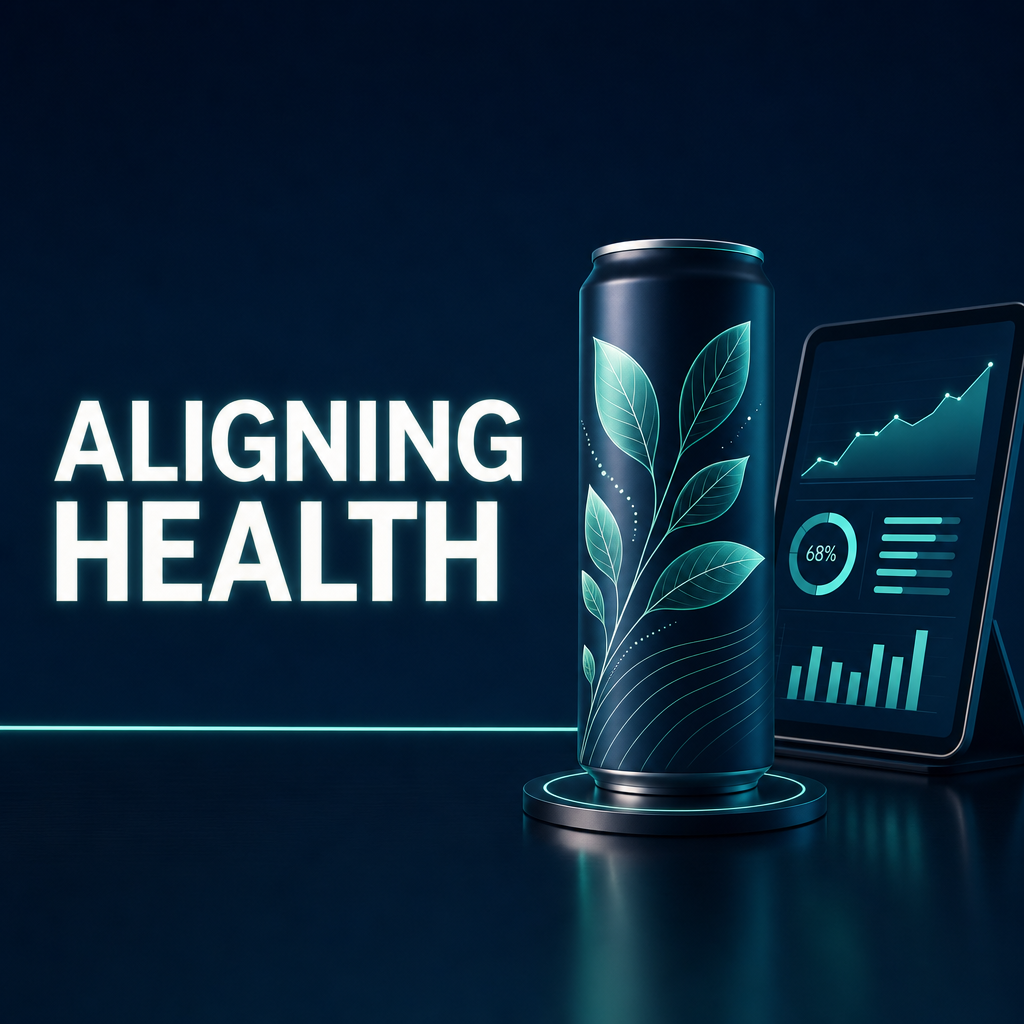
Higher education is changing rapidly. Marketing students no longer need to simply understand sustainability concepts. They need opportunities to apply them in situations where there is no obvious right answer.
That is exactly what Aligning Health LiveCase delivers.
Written by Pierre Chandon, the L'Oréal Chaired Professor of Marketing, Innovation and Creativity at INSEAD, and powered by LiveCase, this immersive simulation places learners inside the executive team of Zing, a global beverage company facing growing pressure to improve both public health outcomes and environmental sustainability.
Instead of analysing decisions after they have been made, students become the decision-makers themselves.
The result is an engaging learning experience that strengthens judgement, ethical reasoning, and strategic thinking while reflecting the complexity of modern business. It also demonstrates how experiential learning can prepare students for challenges that traditional case discussions alone cannot fully replicate.
Why Sustainable Marketing Is More Complex Than Ever
Consumers expect brands to contribute positively to society. Governments continue introducing stricter health regulations. Investors increasingly evaluate environmental, social, and governance performance alongside financial results.
For marketing leaders, these pressures create difficult questions.
Should healthier products sacrifice taste?
How should companies communicate sustainability without appearing insincere?
Can organisations improve public health while remaining commercially successful?
These questions rarely have perfect answers. They involve competing stakeholder interests, uncertain data, ethical trade-offs, and long-term strategic thinking.
According to the World Health Organization, unhealthy diets remain one of the leading contributors to noncommunicable diseases globally, making responsible product innovation an increasingly important priority for food and beverage companies.
This complexity makes sustainability an ideal subject for immersive learning rather than simple content delivery.
What Is Aligning Health LiveCase?
Aligning Health LiveCase is an interactive marketing simulation written by Pierre Chandon of INSEAD and powered by LiveCase. The experience places learners on the sustainability task force at Zing, a global beverage company where they must balance public health, sustainability, and commercial performance through a series of realistic executive decisions.
Participants take on the role of senior executives responsible for shaping the company's future.
Throughout the experience, learners:
- Analyse qualitative and quantitative customer insights
- Balance health objectives with commercial performance
- Modify beverage concepts for different customer segments
- Test ideas through interactive stakeholder engagement
- Recommend strategic product changes
- Select the strongest concept for launch
The experience combines storytelling, marketing analysis, role play, and structured decision-making into a realistic executive simulation designed for undergraduate, MBA, and executive education. The simulation typically runs between two and four hours depending on how instructors choose to deliver it.
Learning Through Decisions Instead of Answers
One of the biggest challenges in marketing education today is helping students become comfortable making decisions without perfect information.
Traditional cases often encourage thoughtful discussion, but learners still analyse events after they happened.
LiveCase extends the case method by moving students into the action.
In Aligning Health LiveCase, every decision influences the direction of the experience. Students evaluate customer personas, interpret market research, weigh competing priorities, and defend strategic recommendations.
This active participation creates deeper engagement because learners experience uncertainty first-hand rather than simply reading about it.
As LiveCase is designed around interactive decision-making, learners cannot simply rely on AI-generated summaries. Instead, they must participate throughout the simulation, applying judgement and adapting their thinking as new information emerges. :contentReference[oaicite:0]{index=0}
Exploring the Triple Win
One of the simulation's most valuable concepts is the pursuit of a "triple win."
Students must identify strategies that benefit:
- Customers through healthier products
- Society through improved public health
- The business through sustainable commercial success
Achieving all three simultaneously is rarely straightforward.
Improving ingredients may increase costs.
Reducing portion sizes may affect customer perceptions.
Changing messaging may influence purchasing behaviour in unexpected ways.
Rather than presenting sustainability as an abstract principle, Aligning Health LiveCase encourages learners to navigate these trade-offs exactly as marketing leaders do in practice.
Introducing Epicurean Nudging
A particularly distinctive feature of Aligning Health LiveCase is its exploration of epicurean nudging.
Instead of encouraging healthier choices through restriction, students investigate how sensory improvements and product design can naturally influence consumer behaviour.
Learners consider how factors including:
- Flavour
- Product size
- Ingredients
- Packaging
- Messaging
- Pricing
can encourage healthier consumption while maintaining customer satisfaction.
This demonstrates that sustainable marketing often depends on thoughtful product design rather than simply promotional campaigns.
Ethics and Commercial Strategy Go Hand in Hand
Marketing education increasingly requires students to think beyond financial outcomes.
Successful graduates need to understand how commercial decisions affect employees, customers, communities, and society.
Throughout Aligning Health LiveCase, learners combine material reasoning focused on profitability with moral reasoning centred on fairness, wellbeing, and long-term contribution.
They also strengthen leadership qualities including:
- Care
- Courage
- Commitment
The simulation also challenges participants to apply philosophical thinking to strategic decision-making while designing solutions that generate commercial value alongside measurable social impact.
This integration of ethics and strategy reflects the realities facing today's business leaders.
Immersive AI LiveCase Supports Meaningful Learning
Technology should strengthen pedagogy rather than distract from it.
That principle sits at the centre of Immersive AI LiveCase.
Optional AI-driven stakeholder characters allow students to practise conversations, gather feedback, and test assumptions during the trade fair exercise.
Rather than functioning as answer engines, these AI interactions encourage questioning, reflection, negotiation, and adaptive thinking.
Learners must interpret responses, challenge assumptions, and adjust strategies based on new information.
The AI becomes part of the learning environment instead of replacing the learning itself.
This approach also creates more AI-resistant learning design by requiring active participation rather than passive information retrieval.
Designed for Flexible Teaching
Every classroom is different.
Some instructors prefer highly interactive workshops.
Others teach large lecture theatres or fully online programmes.
Aligning Health LiveCase has been designed to support multiple delivery models, including:
- Face-to-face teaching
- Online delivery
- Blended learning
- Undergraduate courses
- MBA programmes
- Executive education
Educators can also choose whether to include AI role-play activities depending on their learning objectives.
This flexibility allows instructors to adapt the experience without redesigning their entire course.
Supporting Rich Classroom Discussion
One of the greatest strengths of experiential learning is the quality of discussion it creates afterwards.
Because every learner experiences different decisions, conversations become richer.
Students compare strategies.
They explain trade-offs.
They defend recommendations.
They reflect on outcomes that emerged from their own decisions rather than hypothetical examples.
This creates stronger debrief sessions where instructors can explore not only what happened but why learners made particular choices.
Why Experiential Marketing Education Matters
Modern marketers operate in environments shaped by uncertainty.
Consumer expectations evolve rapidly.
Regulations change.
Social responsibility continues to influence purchasing decisions.
Graduates therefore need more than theoretical knowledge.
They need opportunities to practise judgement.
Experiential learning develops capabilities that employers consistently value:
- Critical thinking
- Ethical reasoning
- Stakeholder management
- Strategic communication
- Leadership
- Decision-making under uncertainty
Aligning Health LiveCase, written by Pierre Chandon, helps develop these capabilities within a realistic business context that feels authentic and relevant.
Exploring More LiveCase Experiences
Educators looking to expand experiential learning can explore additional simulations through the Catalogue.
Those interested in creating their own interactive learning experiences can use Create Your Own LiveCase, which provides no-code authoring supported by AI while allowing educators to retain full ownership of their intellectual property.
If additional instructional design support is needed, the experienced team behind Studio Services can help transform traditional teaching materials into immersive learning experiences.
You can also learn more about the platform and its approach to experiential learning on the LiveCase homepage.
Frequently Asked Questions
1. Who wrote Aligning Health LiveCase?
Aligning Health LiveCase was written by Pierre Chandon, the L'Oréal Chaired Professor of Marketing, Innovation and Creativity at INSEAD, and is powered by LiveCase.
2. Who is Aligning Health LiveCase designed for?
It is suitable for undergraduate, MBA, executive education, and professional development programmes focused on marketing, sustainability, and leadership.
3. What marketing topics does Aligning Health LiveCase cover?
The simulation explores sustainable marketing, customer insights, stakeholder engagement, product innovation, ethical strategy, pricing, positioning, and responsible leadership.
4. Does the simulation require AI role play?
No. AI-powered stakeholder interactions are optional and can be enabled or disabled by the educator.
5. How long does Aligning Health LiveCase take?
The simulation typically takes between two and four hours depending on the activities selected by the educator.
6. How does Aligning Health LiveCase improve engagement?
Students actively make strategic decisions, interact with stakeholders, analyse evidence, and experience the consequences of their choices rather than simply reading a case.
Share

Transform static learning intoimmersive AI simulations.
When students skip PDFs and disengage, LiveCase turns learning into a sequence of decisions, consequences, and active participation.
Trusted by world-leading educators & corporations
Author
Author: Amandine
Head of Marketing
Amandine believes learning isn't a straight path but a creative, evolving experience.With a Master's from Trinity College and a Bachelor's from Leeds University, she helps shape how LiveCase tells its story.Connecting innovation, design, and AI to transform how people learn and engage.Driven by curiosity and a belief in better ways to educate, she brings both strategy and imagination to every project.
Published: 7/16/2026